
What are carbohydrates, and why does your body need them? Learn how to consume carbs properly, avoid carb deprivation, and why athletes drink sugar water for peak performance.
DISCLAIMER: This is general nutritional information. If you have diabetes, metabolic conditions, or specific dietary needs, consult your healthcare provider before making significant dietary changes.
What Are Carbohydrates? The Basics Explained
Carbohydrates are one of three macronutrients (along with protein and fat) that provide energy to your body. Think of carbs as your body’s premium gasoline—they’re the fuel your engine runs best on.

What are carbohydrates made of?
Carbs are sugar molecules that break down into glucose—your body’s favorite energy source. Your brain alone burns through about 120 grams of glucose daily (that’s roughly 480 calories just for thinking!).
Types of Carbohydrates:
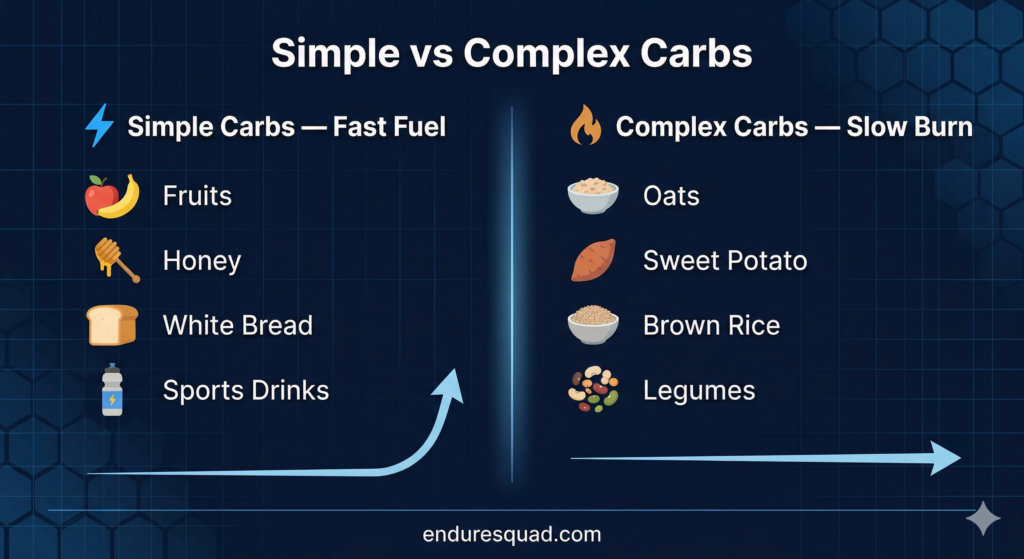
Simple Carbs (Fast Fuel):
- Sugars: Glucose, fructose, sucrose
- Found in: Fruits, honey, candy, soda, white bread
- Analogy: Like newspaper—burns fast and bright, gone quickly
Complex Carbs (Slow Fuel):
- Starches and fiber
- Found in: Oats, rice, potatoes, beans, whole grains
- Analogy: Like hardwood logs—burns steady and long-lasting
Your body converts ALL carbohydrates into glucose eventually. The difference is speed.
Why Does Your Body Need Carbohydrates?
Here’s the truth: carbohydrates aren’t “essential” like some vitamins, BUT they’re your body’s most efficient fuel source. Here’s what they do:
What Carbohydrates Do for Your Body:
1. Power Your Brain
Your brain runs exclusively on glucose. Mental clarity, focus, mood—all depend on steady glucose supply. Low-carb diets often cause brain fog for this exact reason.
2. Fuel Muscles During Exercise
Carbs are stored as glycogen in muscles and liver. During exercise, your body taps these stores. Glycogen = your muscles’ battery pack.
3. Prevent Muscle Breakdown
When carb stores are empty, your body gets desperate. It starts breaking down muscle protein for glucose (gluconeogenesis). No carbs = your body eats its own muscles.
4. Support Hormone Production
Carbohydrates help regulate thyroid hormones, reproductive hormones, and cortisol. Chronic low-carb eating can disrupt thyroid function, sex hormones, sleep quality, and mood regulation.
5. Fuel High-Intensity Performance
During intense exercise (sprinting, weightlifting, HIIT), your body can ONLY use carbs for fuel. Fat burns too slowly for high-intensity demands.
What Happens with Carb Deprivation? The Downsides
Going too low-carb isn’t just uncomfortable—it can harm performance and health.
Short-Term Effects of Carb Deprivation:
Week 1-2: “Keto Flu”
- Fatigue and weakness (your body’s confused about fuel)
- Brain fog and poor concentration
- Irritability and mood swings
- Headaches
- Constipation (fiber often comes from carbs)
- Bad breath (ketone breath)
Long-Term Effects of Severe Carb Restriction:
- Muscle loss — body cannibalizes protein for glucose
- Hormonal disruption — thyroid, reproductive, stress hormones
- Reduced athletic performance — depleted glycogen stores
- Nutrient deficiencies — missing fiber and micronutrients from whole grains/fruit
How to Consume Carbs Properly: The Smart Approach
Not all carbohydrates are created equal. Here’s how to eat them strategically for your goals.
1. Match Carbs to Activity Level
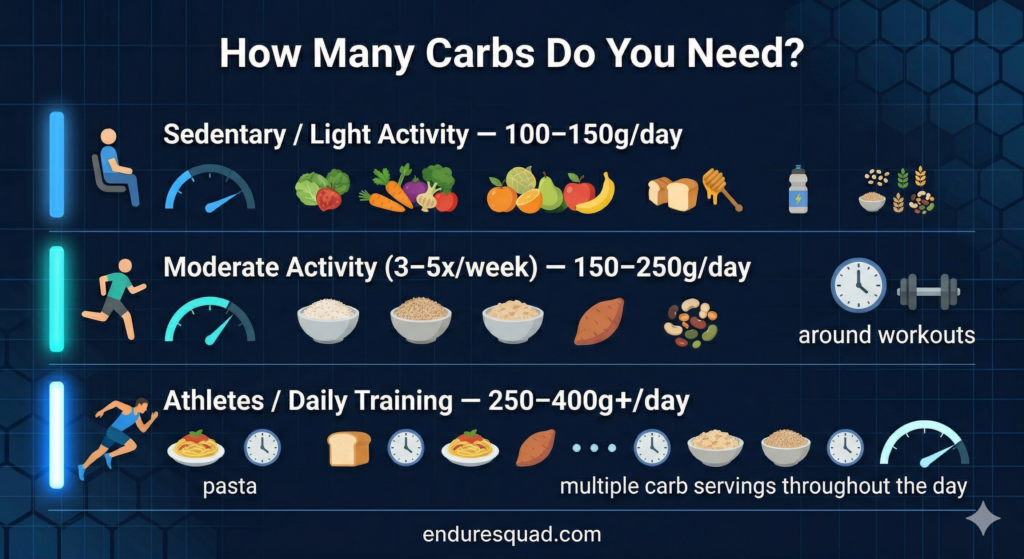
Sedentary/Light Activity:
100-150g daily (vegetables, some fruit, small portions of grains)
Moderate Activity (3-5 workouts/week):
150-250g daily (add rice, oats, potatoes around workouts)
High Activity (Athletes, daily training):
250-400g+ daily (multiple servings throughout the day)
2. Time Your Carbs Strategically
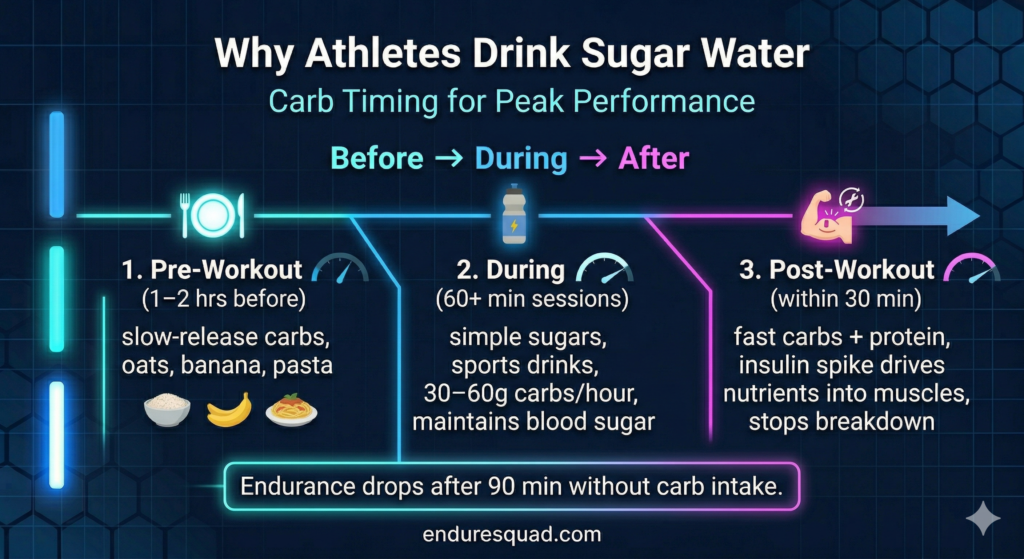
Before training (1-2 hours): Slow-release carbs for sustained energy — oatmeal, banana, whole grain toast
During training (60+ min sessions): Fast-digesting options — sports drinks, gels, fruit
After training (within 30 min): Fast carbs + protein — rice + chicken, protein shake + banana, Greek yogurt + berries
3. Choose Quality Carb Sources
Best carb sources: oats, sweet potatoes, brown rice, quinoa, fruits, legumes, whole grain bread
Limit: white bread, pastries, soda, candy, ultra-processed snacks
4. Pair Carbs With Protein and Fat
For stable blood sugar and sustained energy: carbs alone = blood sugar rollercoaster. Carbs + protein + fat = steady energy. Learn how insulin and blood sugar work together to understand why pairing matters.
Why Athletes Drink Sugar Water: The Performance Secret
You see marathon runners gulping down what looks like straight sugar water, and bodybuilders chugging Gatorade mid-workout. Are they crazy? Nope — they’re strategic.
Why Active People Consume Simple Carbs:
1. Immediate Energy Availability
During intense or prolonged exercise (60+ minutes), your body burns through glycogen fast. Simple carbs hit your bloodstream in 15-20 minutes—exactly when you need them.
2. Delays Fatigue
Endurance drops significantly after 90 minutes without carb intake. “Hitting the wall” in marathons? That’s glycogen depletion.
3. Maintains Blood Sugar During Exercise
Working muscles are glucose vacuums. Without carb intake during long sessions, blood sugar drops → dizziness, weakness, poor coordination.
4. Improves Recovery
Post-workout simple carbs spike insulin on purpose. This drives nutrients into muscles, stops breakdown, and starts repair immediately.
What Athletes Actually Drink:
- Sports drinks: 6-8% glucose/sucrose solution (Gatorade, homemade)
- Energy gels: 20-25g fast-digesting carbs per packet
- Dates/bananas: Natural whole-food options during training
- Rice balls: Used by elite cyclists and triathletes
How Much Carbohydrate Do You Actually Need?
General Guidelines:
Sedentary Individual:
2-3g per kg body weight (100-150g for a 70kg person)
Moderate Exercise (3-5x/week):
3-5g per kg (210-350g for a 70kg person)
Endurance Athletes:
5-7g per kg (350-490g for a 70kg person)
Elite/High-Volume Athletes:
6-10g per kg (420-700g for a 70kg person)
According to research published in the Journal of the International Society of Sports Nutrition, carbohydrate timing and quantity significantly impact both performance and recovery in trained athletes.
Carbohydrate Myths Debunked
Myth: “Carbs make you fat”
Truth: Excess calories make you fat. Carbohydrates are only a problem when you overeat them relative to your activity level.
Myth: “You don’t need carbs”
Truth: While not “essential,” carbs optimize performance, hormones, mood, and muscle growth for most active people.
Myth: “All carbs are bad”
Truth: Context matters. Candy at your desk? Probably unnecessary. Candy during a marathon? Performance fuel.
Myth: “Low-carb is always better for fat loss”
Truth: Many studies show equal fat loss between low-carb and moderate-carb diets when calories and protein are matched.
The Bottom Line: Carbs Are Tools, Not Enemies
Understanding what carbohydrates are and how to use them strategically is the key to better energy, performance, and health.
Key Takeaways:
✅ Carbohydrates fuel your brain, muscles, and hormones
✅ Carb deprivation can harm performance, hormones, and health
✅ Match intake to activity level
✅ Time carbs around workouts for best results
✅ Athletes use simple carbs strategically for performance
✅ Quality matters—choose whole food sources most of the time
Don’t fear carbs. Use them strategically based on your goals and activity level. Your body isn’t the enemy. Neither are carbohydrates.
REMEMBER: Individual needs vary significantly based on genetics, health status, activity level, and goals. The information here is a starting point—listen to your body and work with a registered dietitian for personalized guidance.