
Ever felt that post-lunch crash where you can barely keep your eyes open? Or gotten “hungry” an hour after eating? You’ve just experienced insulin in action. Let’s decode this powerful hormone.
IMPORTANT DISCLAIMER: This is general information only. If you have diabetes or metabolic conditions, consult your doctor before making lifestyle changes.
What Is Insulin? Your Blood Sugar Regulator Explained
Insulin is a hormone your pancreas makes to control blood sugar levels. Think of it as your body’s delivery driver—it takes glucose (sugar) from your bloodstream and delivers it to your cells for energy.
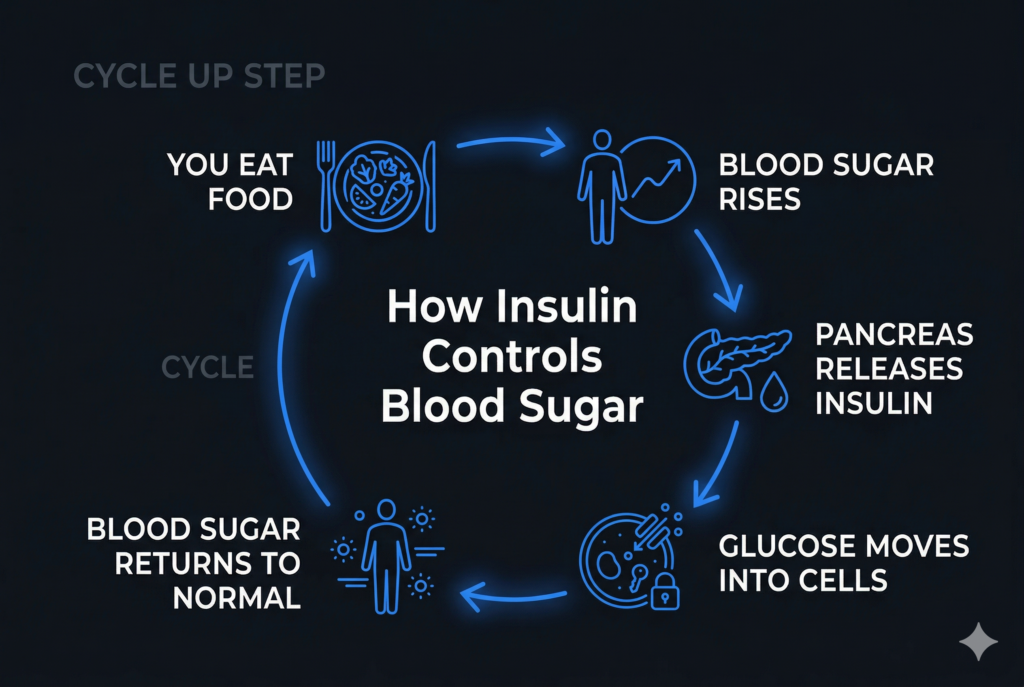
How insulin controls blood sugar:
- You eat food
- Blood sugar rises
- Pancreas releases insulin
- Insulin moves glucose into cells
- Blood sugar returns to normal
Without insulin, sugar stays stuck in your blood—dangerous and useless. In Type 1 diabetes, the pancreas doesn’t make insulin. In Type 2 diabetes, cells ignore insulin’s signals (insulin resistance).
What Is an Insulin Spike?
An insulin spike happens when your pancreas releases too much insulin too fast—like sending 50 delivery trucks when you need 2. Understanding how carbohydrates affect your body can help you make smarter food choices.
What causes insulin spikes:
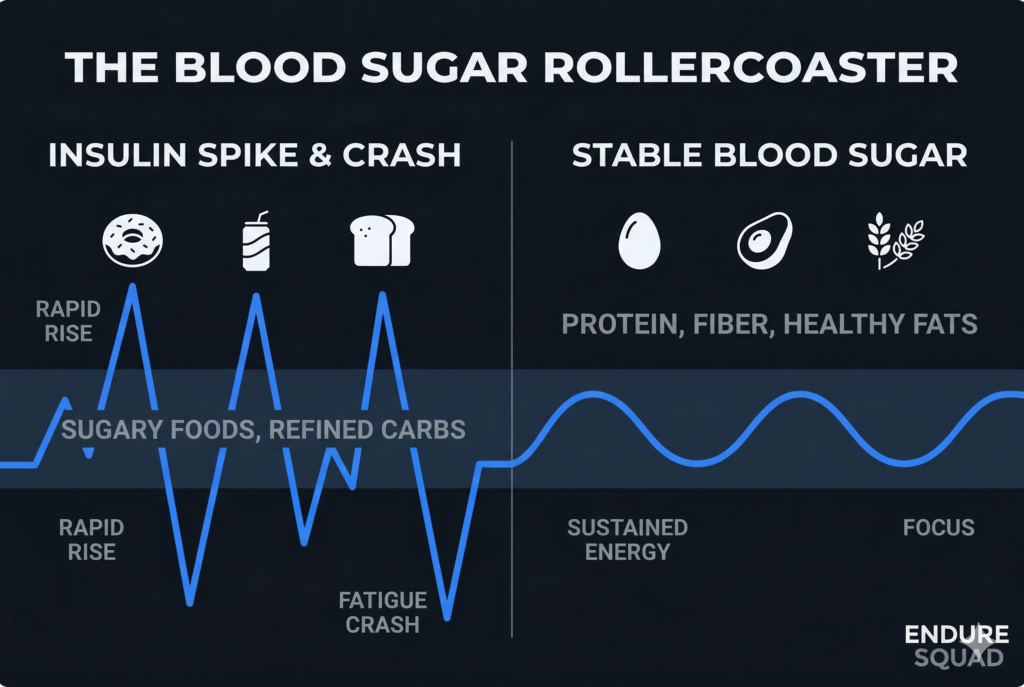
- Sugary foods and drinks
- White bread, pastries, candy
- Eating carbs without protein or fiber
- Large meals after fasting
The blood sugar rollercoaster:
- 8:00 AM: Eat donuts → Blood sugar skyrockets 📈
- 8:20 AM: Pancreas dumps insulin
- 9:30 AM: Blood sugar crashes 📉
- 9:45 AM: You’re exhausted and craving more sugar
Why Insulin Spikes Harm Your Body
Short-term effects:
- Energy crashes and fatigue
- Brain fog and poor focus
- Intense hunger and cravings
Long-term effects of chronic spikes:
- Insulin resistance → Weight gain (especially belly fat)
- Inflammation → Heart disease, aging
- Hormonal chaos → Disrupted hunger and stress hormones
- Pancreas burnout → Reduced insulin production
Learning how to control blood sugar naturally prevents these problems. According to the National Institute of Diabetes, lifestyle changes can significantly improve insulin sensitivity.
10 Natural Ways to Control Blood Sugar
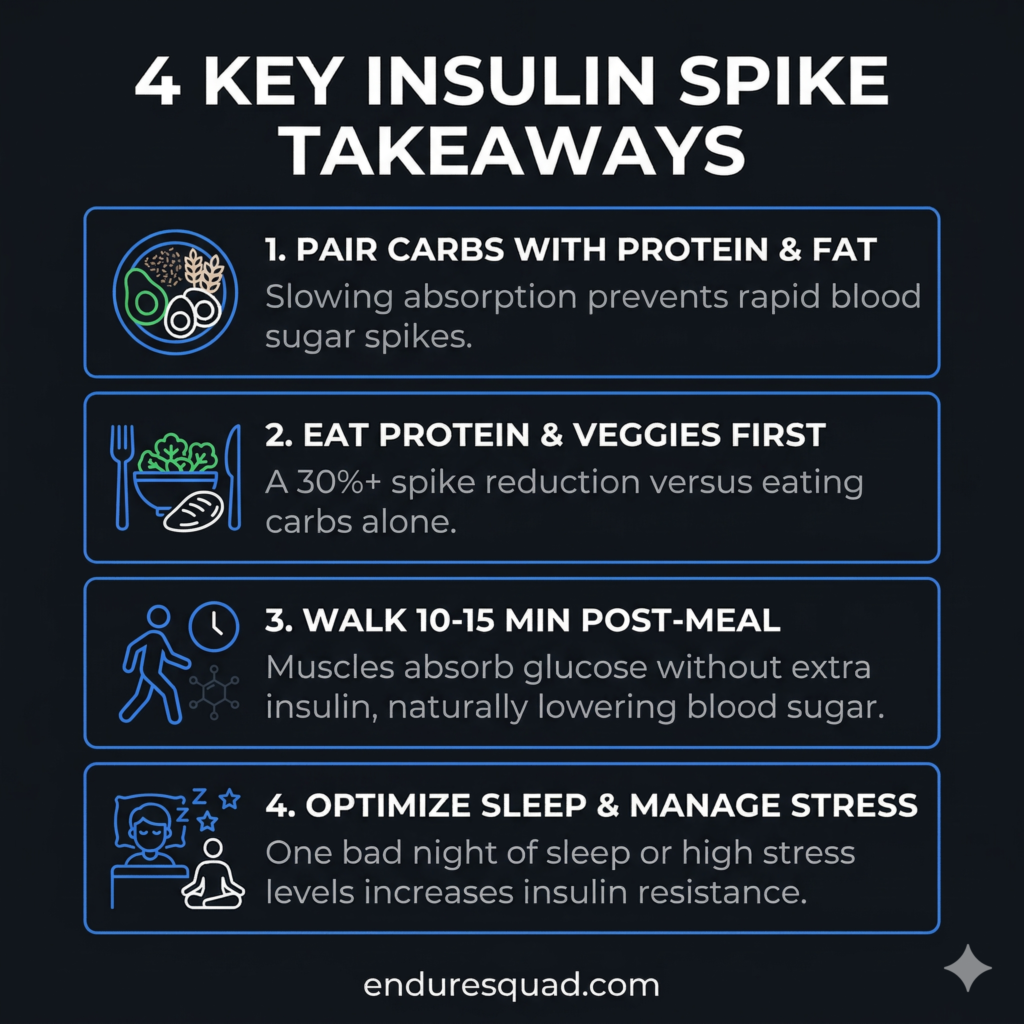
1. Pair Carbs with Protein, Fat, and Fiber
❌ White toast alone
✅ Whole grain toast + avocado + eggs
This slows sugar absorption and prevents spikes.
2. Choose Low Glycemic Foods
High GI (avoid): White bread, soda, candy, instant oatmeal
Low GI (choose): Oats, sweet potatoes, beans, berries, vegetables
3. Eat Protein First
Start meals with protein and veggies before carbs—reduces post-meal glucose spikes by 30%.
4. Add Apple Cider Vinegar
1-2 tablespoons before meals slows digestion and reduces post-meal glucose rises.
5. Walk After Meals
A 10-15 minute walk after eating lowers post-meal glucose by 15-25%. Muscles absorb glucose without needing extra hormonal response.
6. Don’t Skip Meals
Skipping leads to overeating and massive spikes later. Eat balanced meals every 3-5 hours.
7. Sleep 7-9 Hours
Poor sleep increases resistance to hormones that regulate glucose. Just one bad night affects your body’s control over blood sugar.
8. Manage Stress
Stress hormones raise glucose levels. Try meditation, exercise, or time in nature.
9. Stay Hydrated
Drink 8-10 glasses of water daily. Dehydration concentrates glucose in your bloodstream.
10. Increase Fiber Intake
Target 25-35 grams daily from vegetables, legumes, whole grains, and seeds.
Using Insulin to Your Advantage: Post-Workout
Here’s the plot twist: Right after intense exercise, your hormonal response becomes your friend.
Your muscles are depleted and hungry for nutrients. A healthy hormonal response helps:
- Rebuild muscle (protein delivery)
- Refill energy stores (carb delivery)
- Speed recovery
Post-workout meal (within 30-60 minutes):
- Protein shake + banana
- Rice + chicken
- Greek yogurt + berries
Best Foods to Stabilize Blood Sugar
Eat more:
- Protein: Chicken, fish, eggs, Greek yogurt, beans
- Healthy fats: Avocado, nuts, olive oil, salmon
- Complex carbs: Oats, quinoa, sweet potatoes
- Vegetables: Leafy greens, broccoli, peppers
- Berries: Blueberries, strawberries (low sugar)
Eat less:
- White bread and pasta
- Soda and sweetened drinks
- Processed snacks and sweets
Frequently Asked Questions
Can you reverse insulin resistance?
Yes—through weight loss, exercise, better diet, sleep, and stress management. Consult your doctor.
Normal blood sugar levels?
Fasting: 70-99 mg/dL. After meals: Below 140 mg/dL.
How long to stabilize blood sugar?
Most people see improvements in 1-2 weeks with consistent changes.
The Bottom Line
Small, consistent habits make the biggest difference for stable energy and long-term health:
✅ Pair carbs with protein, fat, and fiber
✅ Choose low glycemic foods
✅ Walk after meals
✅ Sleep well and manage stress
✅ Use post-workout nutrition strategically