
What Exactly Is a Calorie?
Think of a calorie like a tiny battery for your body. When that banana says “100 calories,” it’s telling you how much fuel you’re getting.
Here’s the catch: your body isn’t a simple calculator. Just like different cars get different mileage, your body extracts energy differently based on your gut bacteria, metabolism, and even what you ate yesterday.
From Coal to Cake: The Quick History
The word “calorie” comes from Latin calor (heat). In 1824, French scientist Nicolas Clément coined it while studying… coal, not croissants!
The real breakthrough? In the 1780s, Antoine Lavoisier discovered we “burn” food with oxygen, just like a campfire. Your cells are basically tiny, controlled fires turning lunch into energy.
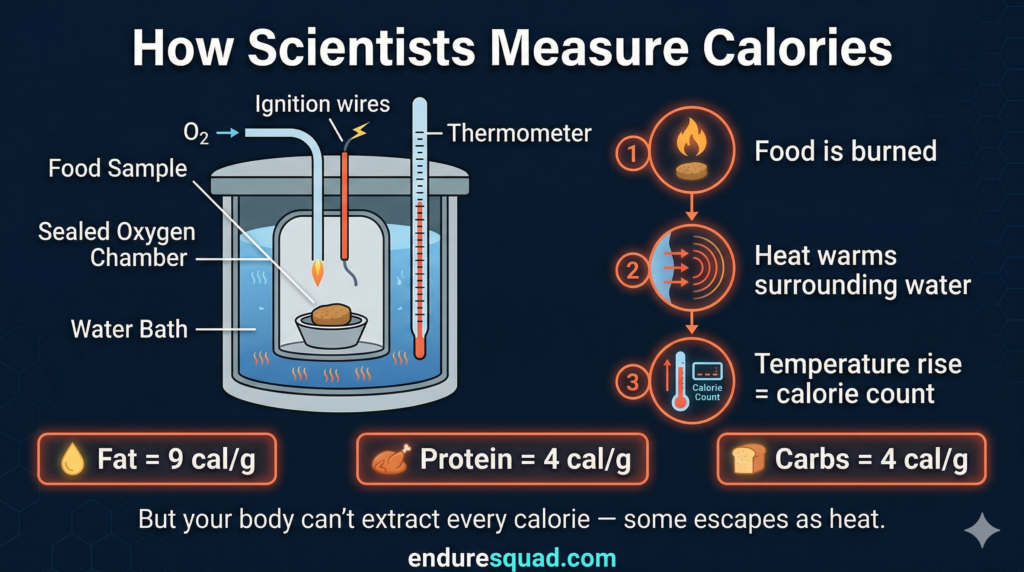
How Scientists Measure Calories
They literally burn food in a “bomb calorimeter”:
- Food burns in a sealed chamber
- Heat warms surrounding water
- Temperature rise = calories
This gives us: 9 calories per gram of fat, 4 per gram of protein or carbs. But your body can’t extract every calorie—some escapes as heat, and fiber passes right through. According to NIH research on energy balance, these thermodynamic principles form the foundation of modern nutrition science.
The Atwater Discovery: Why Labels Aren’t Perfect
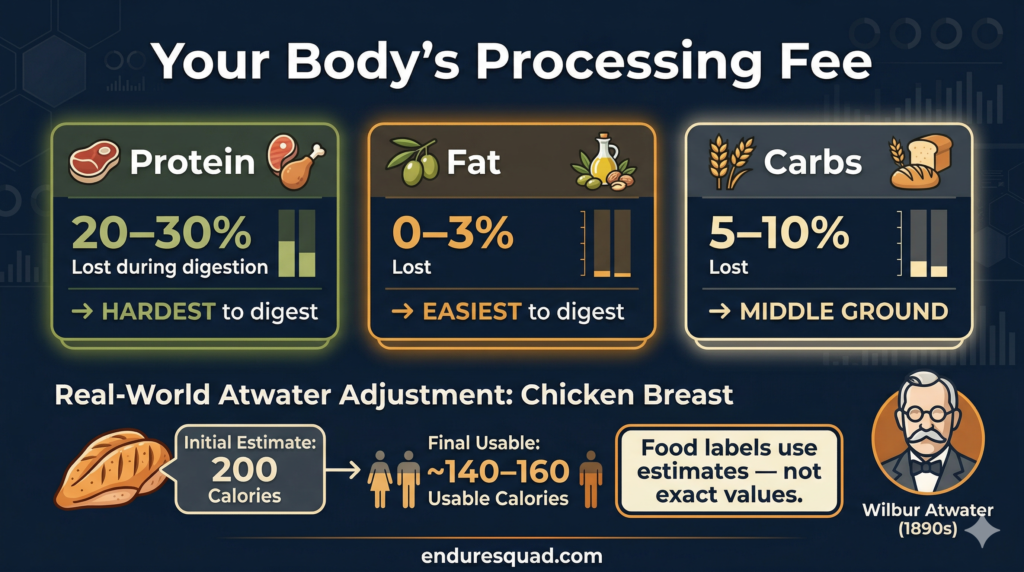
In the 1890s, Wilbur Atwater found that digestion burns calories—like your body’s “processing fee”:
- Protein: Loses 20-30% (hard to break down)
- Fat: Loses 0-3% (easy to digest)
- Carbs: Loses 5-10% (middle ground)
So that 200-calorie chicken breast? You really get about 140-160 usable calories. Food labels use Atwater’s simplified system—good enough, but still an estimate.
Energy Balance: Simple Math, Complex Reality
Calories In > Calories Out = Weight gain
Calories In < Calories Out = Weight loss
Seems simple, right? But hormones, sleep, stress, and food quality all affect this equation.
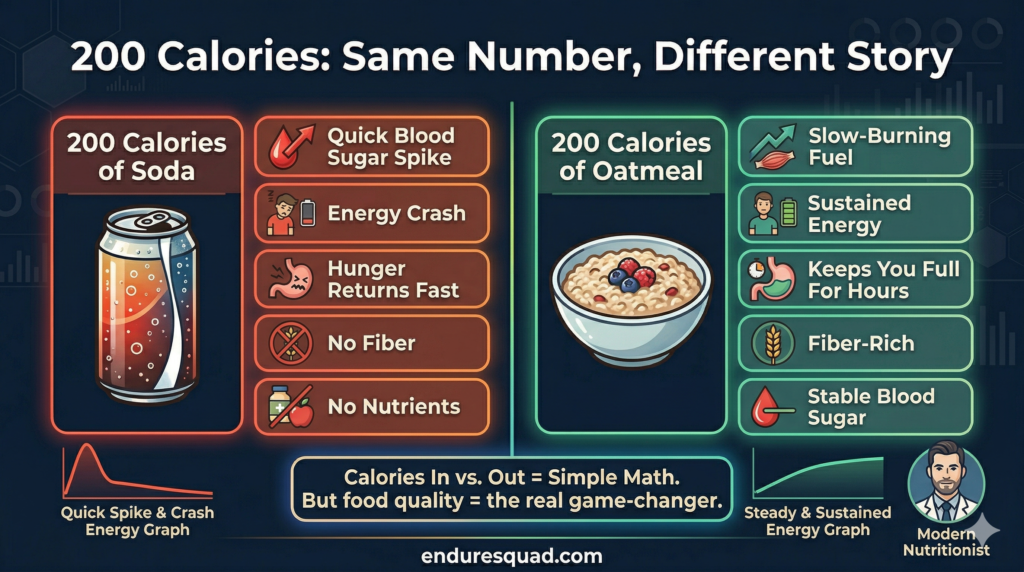
The real difference:
- 200 calories of oatmeal = Slow-burning fuel, keeps you full for hours
- 200 calories of soda = Quick spike, crash, then hunger
Not All Calories Are Equal
Imagine two $100 bills:
- Bill A (spinach): Comes with vitamins, iron, fiber
- Bill B (candy): Just sugar, nothing else
Both have the same “value,” but only one gives your body what it needs. To go deeper on how food quality impacts your energy, read our guide on good calories vs bad calories.
The big three:
- Protein: Repairs muscles, builds enzymes
- Fat: Brain health, hormone production
- Carbs: Quick energy for brain and muscles
Your Action Plan
- Choose nutrient-dense foods: veggies, lean proteins, whole grains
- Quality over quantity: 200 calories of nuts ≠ 200 calories of chips
- Remember: Food labels are guides, not gospel
The Bottom Line: Calories measure energy, but they’re just one piece. Your body is way more complex than any number can capture.
Academic references available upon request