
Disclaimer: This is general nutritional information. If you have kidney disease, specific dietary restrictions, or medical conditions, consult your healthcare provider before changing your protein intake.
You know protein is essential. But not all protein is created equal.
Some proteins build muscle like rocket fuel. Others barely move the needle. Some digest in 30 minutes. Others take 8 hours. Some come with a full arsenal of nutrients. Others are just empty calories wearing a protein disguise.
The difference between eating 150g of gas station beef jerky vs 150g of grilled salmon? Night and day. Your muscles, your wallet, and your taste buds will all tell you.
In this guide to the best protein sources, we decode the protein quality hierarchy, nail the timing strategies that actually matter, and destroy the myths keeping you from optimal results.
Best Protein Sources: The Quality Hierarchy
Choosing the best protein sources means understanding quality. Protein quality depends on three factors:
- Amino acid profile – Does it have all 9 essentials?
- Digestibility – Can your body actually absorb it?
- Bioavailability – How much ends up building muscle vs getting wasted?
Tier 1: Complete, Highly Bioavailable Proteins (The Gold Standard)
Animal sources dominate this category.
Eggs (Biological Value: 100 – the gold standard)
- 6g protein per egg
- All 9 essential amino acids in perfect ratios
- Highly digestible, affordable, and versatile
- Eggs are the Swiss Army knife of protein
Chicken Breast (Biological Value: 79)
- 31g protein per 100g
- Extremely lean (only 3.6g fat)
- Cheap, widely available, easy to prep
- The workhorse of every serious fitness diet
Greek Yogurt (17g protein per 100g)
- High in casein (slow-digesting) – great before bed
- Rich in calcium and probiotics
- Combine with fruit for a complete meal
Salmon (Biological Value: 70)
- 25g protein per 100g
- Loaded with omega-3s (EPA + DHA)
- Reduces inflammation from training
- Premium fuel for muscle and brain
Lean Beef (Biological Value: 80)
- 26g protein per 100g
- High in iron, zinc, and B12
- More expensive but nutrient-dense
- Grass-fed is superior for omega-3 content
Whey Protein Powder (Biological Value: 104 – higher than eggs)
- 20-25g protein per scoop
- Fastest-digesting (hits bloodstream in 30 minutes)
- Ideal post-workout window protein
- Convenient, but whole food first
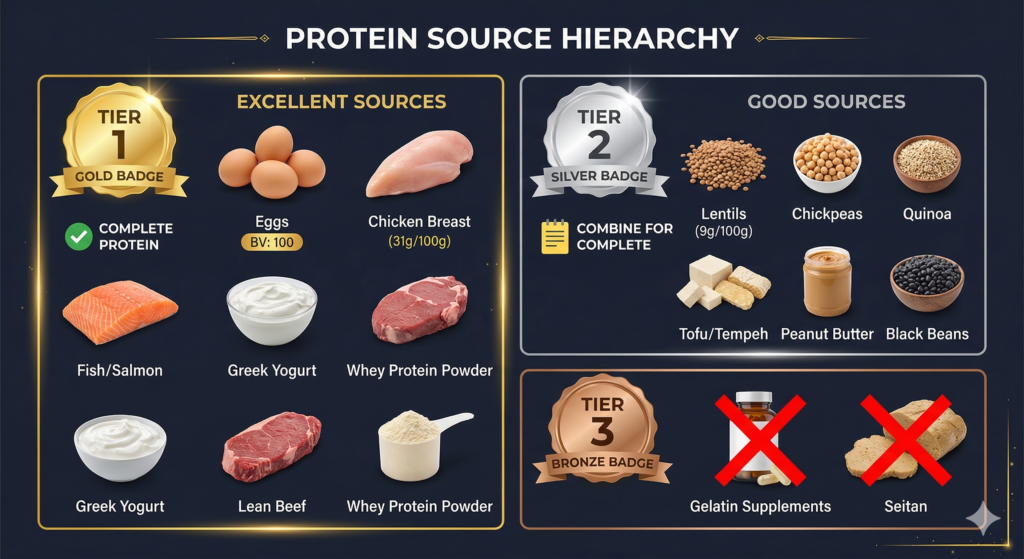
Tier 2: Incomplete Plant Proteins (Good, But Need Combining)
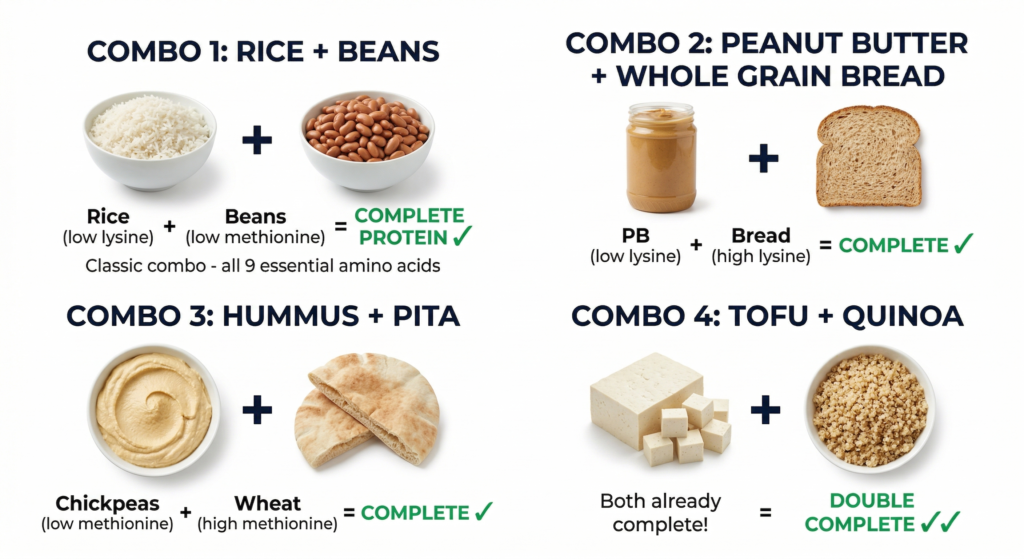
Most plant proteins lack one or more essential amino acids. Combine them strategically, and you are golden.
Lentils (9g protein per 100g cooked)
- Missing: Methionine
- Pair with: Rice or quinoa
- Bonus: High fiber, iron, and folate
Chickpeas (9g protein per 100g cooked)
- Missing: Methionine
- Pair with: Whole grains
- Versatile (hummus, curries, roasted snacks)
Tofu and Tempeh (8-15g protein per 100g)
- Soy-based, complete protein
- Fermented tempeh offers better digestion
- Moderate soy consumption is fine for both men and women
Peanut Butter (25g protein per 100g)
- Missing: Lysine
- Pair with: Whole grain bread or banana
- High in healthy fats – watch calories
Black Beans (9g protein per 100g cooked)
- Missing: Methionine
- Pair with: Rice (a classic combination for good reason)
- High fiber supports blood sugar control
Tier 3: Avoid as Primary Sources (Low Quality, Poor Absorption)
Gelatin and Collagen Supplements
- Incomplete amino acid profile (missing tryptophan)
- Not a substitute for real protein
- Fine as a supplement, not as a primary source
Processed Meats (Hot Dogs, Sausages)
- Lower protein density relative to fat content
- High sodium and preservatives
- Occasional treat only – not a staple
Protein Timing: When to Eat the Best Protein Sources for Maximum Results
Daily Distribution (More Important Than You Think)
Once you know which best protein sources to choose, timing them correctly maximises results. Most people eat this way: 10g breakfast, 20g lunch, 80g dinner. This is inefficient. Your body can only synthesize so much muscle protein at once – the rest goes to energy.
The optimal approach:
- Spread protein across 3-5 meals
- Aim for 20-40g per meal
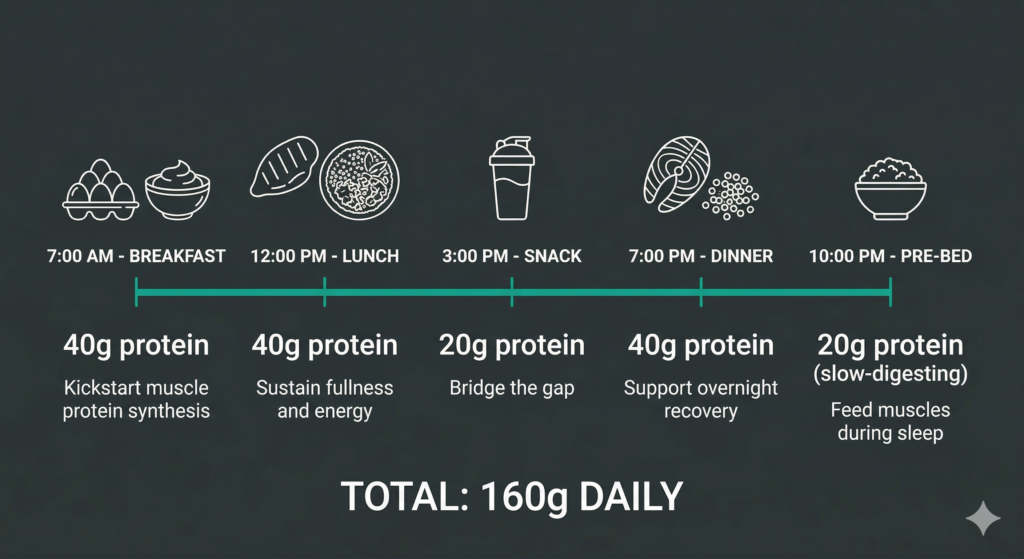
- Example: 4 meals x 40g = 160g total daily
Sample Distribution for 160g Daily
- Breakfast: 40g (4 eggs + Greek yogurt)
- Lunch: 40g (Chicken breast + quinoa)
- Snack: 20g (Protein shake)
- Dinner: 40g (Salmon + lentils)
- Before bed: 20g (Cottage cheese)
The Post-Workout Window (Not a Myth, But Overrated)
The old dogma claimed you had a 30-minute “anabolic window” post-workout. Miss it, and gains disappear. The truth: the window is more like 3-5 hours, and it matters more if you train fasted.
What the research actually shows:
- Post-workout protein boosts recovery
- Timing matters slightly for muscle growth
- Total daily intake matters far more than exact timing
- The window closes within 3-5 hours, not 30 minutes
Pre-Workout Protein
Eating 20-40g of protein 2-3 hours before training provides amino acids during the workout itself. This is especially valuable if you train fasted or in the morning.
Before Bed: The Overnight Recovery Window
During sleep, your body does the majority of its muscle repair and growth. Eating slow-digesting protein (casein) before bed keeps amino acid levels elevated throughout the night.
Best protein sources before bed: Cottage cheese, Greek yogurt, or a casein protein shake.
What Happens When You Don’t Eat Enough Protein
Short-Term Effects (Days to Weeks)
Muscle Loss
- Body breaks down muscle for amino acids
- Strength decreases noticeably
- Recovery takes longer after workouts
Constant Hunger
- Protein suppresses ghrelin (the hunger hormone)
- Without adequate protein, appetite becomes relentless
- You end up eating more calories trying to feel full
Energy Crashes
- Blood sugar swings without protein to stabilize
- The 3 PM slump gets worse
- Caffeine dependency increases
Poor Workout Recovery
- Muscles stay sore longer
- Strength decreases between sessions
- You feel weaker in the gym over time
Mood Swings
- Tryptophan (an amino acid) is required to produce serotonin
- Low protein leads to low serotonin, depression, and irritability
- Brain fog and poor concentration follow
Long-Term Effects (Months of Low Protein)
- Sarcopenia (age-related muscle loss accelerates)
- Weakened immune system
- Hair thinning and nail brittleness
- Hormonal imbalances
- Increased fracture risk as bone density declines
Protein Myths – Fully Debunked
Myth 1: “High Protein Damages Your Kidneys”
The claim: Protein overworks kidneys and causes long-term damage.
The truth: This myth originated from studies on patients who already had kidney disease. In those cases, limiting protein is valid medical advice.
Decades of research on athletes eating 2-3g per kg show zero kidney damage in healthy individuals. Your kidneys are designed to filter protein waste – that is their job. If you have chronic kidney disease (CKD), yes, limit protein. For healthy people, it is not a concern.
Myth 2: “Too Much Protein Causes Osteoporosis”
The claim: Protein increases acid load, leaching calcium from bones.
The truth: Long-term research shows high protein actually increases bone density because it boosts IGF-1 (insulin-like growth factor) and calcium absorption. Elderly people with higher protein intake consistently show stronger bones and fewer fractures.
Myth 3: “You Can Only Absorb 30g of Protein Per Meal”
The claim: Eating more than 30g at once is wasted.
The truth: Your body absorbs all the protein you eat. It just synthesizes muscle protein at a limited rate. Think of it like a gas station: your car’s tank holds 15 gallons, but you can pump 20. The extra fuel goes elsewhere – it is not wasted. Spreading protein across meals still optimizes muscle protein synthesis, but eating a 60g meal is not harmful or wasteful.
Myth 4: “Plant Protein Is Just As Good As Animal Protein”
Reality: Objectively, animal protein has a higher biological value, better amino acid profile, and superior digestibility. That does not mean plant-based diets cannot work – they absolutely can with proper planning and combining. But claiming equivalence without acknowledgment of the differences does a disservice to people trying to optimize their nutrition.
Myth 5: “Eating Protein Before Bed Makes You Fat”
Reality: Calories make you fat, not meal timing. Slow-digesting protein before bed actually supports overnight recovery and muscle protein synthesis without adding to body fat when kept within your daily calorie targets.
Myth 6: “Women Should Not Eat Too Much Protein – They Will Get Bulky”
Reality: Women have 10-20x less testosterone than men. Getting “bulky” from eating adequate protein is physiologically not possible without years of dedicated heavy training and specific hormonal conditions. High protein supports fat loss, muscle tone, and long-term health in women just as effectively as in men.
Frequently Asked Questions
Is protein powder necessary?
No. Protein powder is a convenience tool, not a necessity. The best protein sources for muscle building are whole foods. You can hit your targets entirely through whole foods. Powder becomes useful when whole food sources are inconvenient or when you struggle to hit your targets through diet alone.
Can I get enough protein on a plant-based diet?
Yes. Plant-based best protein sources can absolutely meet your needs. Combine complementary proteins (rice and beans, hummus and pita, tofu and edamame) and track your intake carefully. Plant-based athletes who hit their protein targets consistently achieve excellent results.
Does high protein intake damage kidneys?
Not in healthy individuals. Decades of research show no kidney damage in people eating 2-3g per kg body weight. The concern applies specifically to those with pre-existing kidney disease.
What is the best time to eat protein?
Priority one: hit your daily total. Priority two: spread it evenly across 3-5 meals. Post-workout and pre-bed timing matter on the margins, but total daily intake drives the majority of results.
Can you eat too much protein?
For healthy people, no. Studies show no negative effects up to 3.5g per kg body weight. Beyond that, any excess is simply burned as fuel. It is expensive and inefficient, but not dangerous.
Is animal protein better than plant protein?
Objectively, yes – animal protein has higher biological value, complete amino acids, and better digestibility. However, a well-planned plant-based diet can absolutely meet protein needs. The key is strategic food combining and consistent tracking.
How does protein help with weight loss?
Protein is the most satiating macronutrient and has the highest thermic effect – your body burns 20-30% of protein calories just digesting it. High protein intake during a calorie deficit preserves lean muscle while fat is lost, resulting in a leaner body composition at the end of a cut.
The Bottom Line
Choosing the best protein sources strategically is one of the highest-leverage nutrition decisions you can make. Animal proteins lead on bioavailability and amino acid completeness. Plant proteins can absolutely contribute – and in some cases, provide superior micronutrient density – but they require strategic combining to be complete.
Timing your protein correctly across the day, prioritizing quality sources, and consistently hitting your daily target are the three levers that drive real results. The myths and confusion around protein are largely noise – the fundamentals are simple and backed by decades of research.
- Won’t damage healthy kidneys
- Won’t make women bulky
- Cannot be eaten in amounts too high to benefit from in practical terms
For healthy people, eat 1.6-2.4g per kg daily, spread throughout the day, prioritize quality sources, and stop worrying about minor timing details. Your body is a machine. Give it premium fuel.
Scientific References
- International Society of Sports Nutrition – Protein Position Stand
- Harvard T.H. Chan School of Public Health – Protein Sources
- National Institutes of Health – Protein Fact Sheet
- American College of Sports Medicine
- Mayo Clinic – Protein Requirements
Complete Your Nutrition Education
The Protein Series
- Part 1: What Is Protein? The Powerful Muscle-Building Molecule
- Part 2: Best Protein Sources – Complete Guide (You Are Here)